
罗马假日
Return of delicate aquatic plant signals Chinese lake's revival_我的网站

一 | 厦门8月22日电 (吴冠标 孙虹)8月,福建厦门鼓浪屿人流如织。
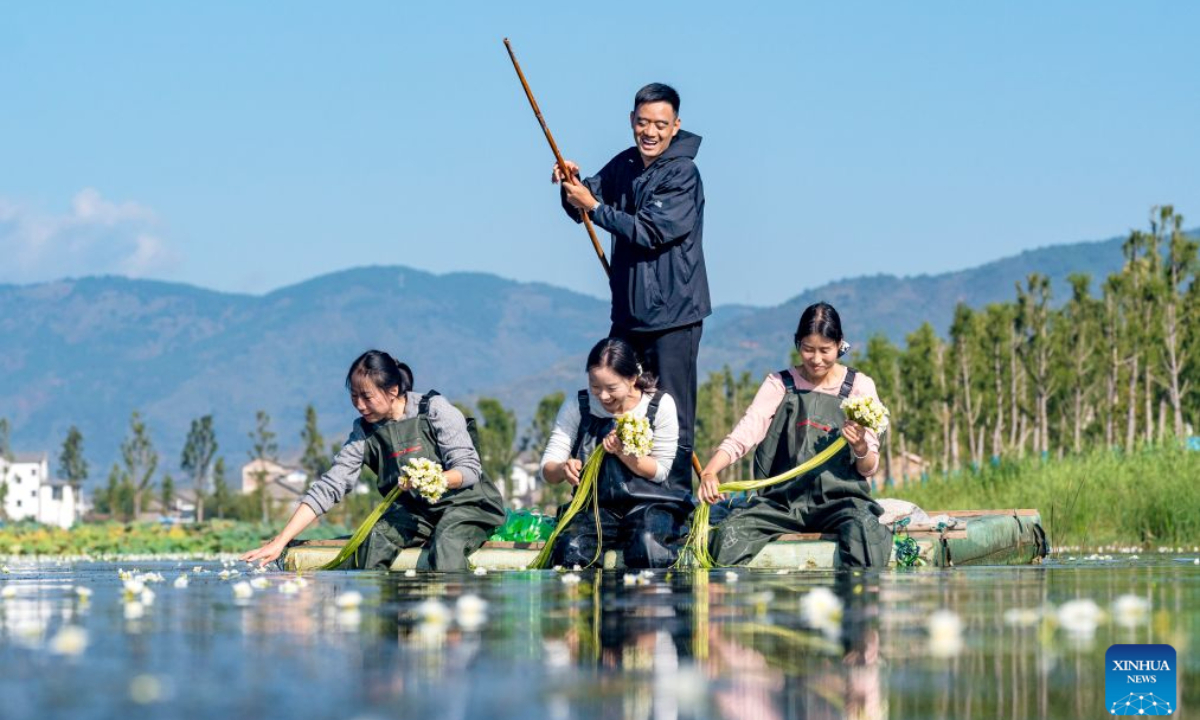
The delicate blossom seen floating there is Ottelia acuminata, an aquatic plant endemic to China, which is known to have extremely strict water quality requirements. It demands high water transparency, cleanliness and calcium content, and survives only in unpolluted waters, serving as a reliable natural indicator of aquatic ecological health.
Its large-scale revival vividly testifies to Erhai Lake's remarkable ecological restoration achievements.
China's Ecological and Environmental Code, enacted on Saturday, stipulates nationwide protection and restoration of river and lake ecosystems, providing solid legal support for systematic water ecological governance across the country.
As China advances its Beautiful China initiative, this code is expected to strengthen rule-of-law guarantees for ecological protection and provide fresh impetus for the country's green and low-carbon transition.
In the early 1990s, agricultural pollution worsened Erhai Lake's water quality, causing frequent blue-green algae outbreaks. A severe algae bloom hit the lake in 1996, leaving the water turbid and smelly. As the environment degraded, Ottelia acuminata nearly disappeared from the lake.
Thanks to years of targeted ecological protection and restoration efforts, the lake's water quality has improved steadily, maintaining an excellent Grade II standard from January to June 2026, and creating favorable conditions for the return of Ottelia acuminata.
Official data show that the plant's coverage on Erhai Lake has surged from 90,000 square meters in 2021 to 950,000 square meters in 2026, marking a remarkable ecological recovery.
The improved water environment has also brought tangible economic benefits, turning the lake's ecological advantages into a sustainable industry. From lake ecology to farm cultivation and consumer products, Ottelia acuminata's dual ecological and economic value has been fully realized.
In 2018, environmental worker Zhong Lan noticed the edible plant's great potential for water purification and industrial development. With support from local authorities and Shanghai Jiao Tong University in eastern China, she started a company and built a professional research base in 2024, developing standardized planting techniques that enable high-yield, repeated harvests and offering jobs for local villagers.
Villager Li Xinyuan, who quit Ottelia acuminata cultivation years ago due to low profits, resumed planting in 2023 and earns a stable monthly salary of 4,500 yuan (about 663 U.S. dollars) at the base.
His fellow villager Du Hongquan earned over 100,000 yuan last year from growing the plant and has more than doubled his planting area this year. "The base takes full charge of sales, so we can plant without any worries," Du said.
Eryuan County, the source of Erhai Lake, now has more than 200 hectares of Ottelia acuminata plantation area, creating numerous jobs yearly. The plant has been developed into a diverse range of products like tea, plant-based coffee and cookies.
"I used to think it was exclusive to Yunnan, but I can try it elsewhere too," said a tourist surnamed Ai after tasting the plant at a hotpot restaurant in Hangzhou, east China's Zhejiang Province.
The beautiful lakeside scenery at Erhai has also boosted local tourism. In 2025, Dali received over 120 million tourist visits, attracting visitors to enjoy lake views and experience local Bai ethnic culture, with 407,000 long-term visitors.
Last month, the State Council issued a plan for building a Beautiful China during the 15th Five-Year Plan period (2026-2030), setting out the overall requirements, targets, key tasks and major projects for comprehensively advancing this initiative.
According to the plan, China will achieve overall improvement in ecological and environmental quality and make significant progress toward building a Beautiful China by 2030, with green production and lifestyles largely established and the carbon peaking target reached on schedule.
。

二 | 由老建筑活化改造而来的鼓浪屿故宫文物馆、中国美术馆鼓浪屿艺术空间、鼓浪屿·中国电影音乐馆等特色展馆,成为游人打卡的热门目的地。

三 | 22日,“活力中国调研行”主题采访团走进厦门鼓浪屿,探访一座座文物建筑如何变身公共文化空间,感受这座小岛在文物保护活化与文商旅融合方面的实践。 走进鼓浪屿·中国电影音乐馆,仿佛步入一幅电影与音乐交融的长卷。展柜内,中国首部斩获国际荣誉的电影《渔光曲》同名主题曲红色片芯黑胶试听片引人驻足;互动区里,唱片造型的圆盘点歌装置前围满游客,按下按钮,《爱拼才会赢》《男儿当自强》《牧羊曲》等熟悉旋律便萦绕耳畔;复古影音听筒旁,有人闭目聆听,有人轻声跟唱。 展馆相关负责人蒋晓冰介绍,该馆于今年5月正式对外开放,以多个专题展厅铺展中国电影音乐百年发展历程,是中国首家电影音乐专题展馆。

四 | 接下来还将与金鸡百花电影节融合,落地影展等活动。8月22日,鼓浪屿·中国电影音乐馆吸引众多游客参观体验。 记者 陈小愿 摄 在中国美术馆鼓浪屿艺术空间,“从毕加索到大卫·霍克尼——路德维希夫妇捐赠国际作品选展”正在展出。西班牙艺术大师毕加索晚年作品《抽烟斗的男人》和《带鸟的步兵》前,不时有游客拍照留念。据介绍,未来将有更多来自中国美术馆的藏品和国际艺术珍品在此展出,让这座百年建筑持续焕发文化生命力。 这些高品质文化空间的背后,是鼓浪屿持之以恒的文物保护与活化利用。“鼓浪屿:历史国际社区”申遗成功九年来,鼓浪屿累计投入近2亿元(人民币,下同),完成51处文物修缮、175处风貌建筑保养工程。

五 | 鼓浪屿管委会文保处处长林瑞馨表示,不同于“修缮完成便束之高阁”的模式,鼓浪屿立足遗产本体功能,推动文物建筑向公共文化空间转型,持续供给高品质展览、音乐演出、公益研学等公共文化服务,推动文物遗产从“被守护”转向“被共享”。

六 | 文物“活”起来,消费也随之“热”起来。依托八卦楼风琴博物馆、菽庄花园、鼓浪屿故宫文物馆、延平戏院等展馆,鼓浪屿引入南音、木偶戏、漆线雕、影雕等项目,实现历史建筑与非遗联动展示;同时深度挖掘世遗建筑、音乐艺术、闽南非遗等元素,开发艺术衍生品、电影音乐主题唱片等文创产品,让文化资源变成可带走、可传播的文旅商品。

七 | 据统计,开馆三个多月来,中国美术馆鼓浪屿艺术空间与鼓浪屿·中国电影音乐馆,已实现门票收入破百万元,文创收入20余万元。 在培育消费业态的同时,鼓浪屿注重规范产业治理,维护优质消费生态。

八 | 岛上实行商业业态前置征询机制,优先引进文化艺术类、非遗传承类、闽南本土特色商户,避免商业业态同质化;推行“一店一码”全域信用监管系统,覆盖全岛近千家涉旅商户,保障游客消费体验。 未来,鼓浪屿还将持续做好世界文化遗产保护利用,释放世遗文化价值,深化文商旅体深度融合,打造“世遗文博+文旅消费”的示范样板。
Current article:http://www.zuanniangwandangliaolinechu.sbs/78k/20260826/66285.xlsx
Published on:08:34:26