
足不出户 走遍全世界

一 |
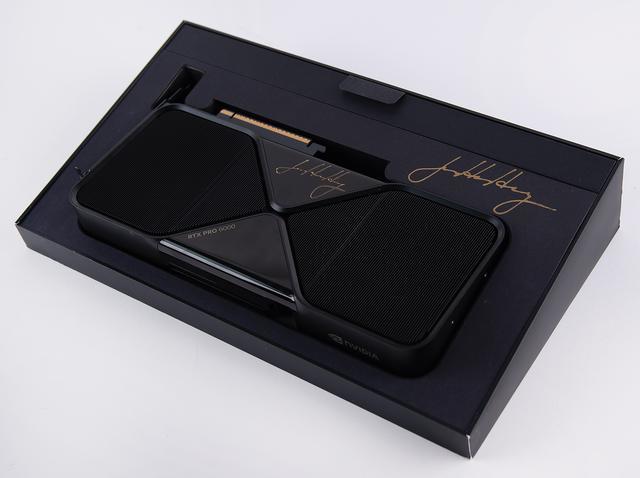 这块“RTX Pro 6000 Blackwell Workstation Edition”显卡是在 RR Auction 举办的“史蒂夫 · 乔布斯与计算机革命:苹果 50 周年纪念拍卖会第二部分”中售出的,竞拍于当地时间周四结束。 DENVER -- Colorado’s highest court on Monday upheld the search of Google users' keyword history to identify suspects in a 2020 fatal arson fire, an approach that critics have called a digital dragnet that threatens to undermine people's privacy and their constitutional protections against unreasonable searches and seizures. However the Colorado Supreme Court cautioned it was not making a “broad proclamation” on the constitutionality of such warrants and emphasized it was ruling on the facts of just this one case.At issue before the court was a search warrant from Denver police requiring Google to provide the IP addresses of anyone who had searched over 15 days for the address of the home that was set on fire, killing five immigrants from the West African nation of Senegal. After some back and forth over how Google would be able to provide information without violating its privacy policy, Google produced a spreadsheet of sixty-one searches made by eight accounts. Google provided the IP addresses for those accounts, but no names. Five of the IP addresses were based in Colorado and police obtained the names of those people through another search warrant. After investigating those people, police eventually identified three teens as suspects.One of them, Gavin Seymour, asked the court to throw the evidence out because it violated the Fourth Amendment's ban on unreasonable searches and seizures by being overbroad and not being targeted against a specific person suspected of a crime. Search warrants to gather evidence are typically sought once police have identified a suspect and gathered some probable cause to believe they committed a crime. But in this case, the trail had run cold and police were seeking a “reverse keyword” warrant for the Google search history in a quest to identify possible suspects. Since the attack seemed targeted, investigators believed whoever set fire to the house would have searched for directions to it.The state Supreme Court ruled that Seymour had a constitutionally protected privacy interest in his Google search history even though it was just connected with an IP address and not his name. While it also said it assumes that the warrant was “constitutionally defective” for not specifying an “individualized probable cause”, the court said it would not throw out the evidence because police were acting in good faith under what was known about the law at the time. The court said it was not aware of any other state supreme court or federal appellate court that has dealt with this type of warrant before.“Our finding of good faith today neither condones nor condemns all such warrants in the future. If dystopian problems emerge, as some fear, the courts stand ready to hear argument regarding how we should rein in law enforcement’s use of rapidly advancing technology. Today, we proceed incrementally based on the facts before us," it said. In a dissent, Justice Monica Marquez said such a wide-ranging search of a billion Google users' search history without a particular target is exactly the kind the Fourth Amendment was designed to stop.“At the risk of sounding alarmist, I fear that by upholding this practice, the majority’s ruling today gives constitutional cover to law enforcement seeking unprecedented access to the private lives of individuals not just in Colorado, but across the globe. And I fear that today’s decision invites courts nationwide to do the same,” she said in the dissent, which Justice Carlos Samour joined in. In a statement, Google said it was important that the court's ruling recognized the privacy and First Amendment interests involved in keyword searches. “With all law enforcement demands, including reverse warrants, we have a rigorous process designed to protect the privacy of our users while supporting the important work of law enforcement,” it said. The ruling allows the prosecution of Seymour and Kevin Bui, who were 16 at the time of the Aug. 5, 2020, fire, to move ahead in adult court on charges of first-degree murder, attempted murder, arson and burglary. Investigators allege Bui organized the attack on the home because he mistakenly believed people who had stolen his iPhone during a robbery lived there.Telephone messages and an email sent to Seymour's lawyers, Jenifer Stinson and Michael Juba, were not immediately returned. A lawyer for Bui, Christian Earle, could not be reached for comment. A third teen, Dillon Siebert, who was 14 at the time and originally charged as a juvenile, pleaded guilty earlier this year to second-degree murder in adult court under a deal that prosecutors and the defense said balanced his lesser role in planning the fire, his remorse and interest in rehabilitation with the horror of the crime. He was sentenced to 10 years behind bars.。RTX Pro 6000 Blackwell 工作站版本身就是一款价格不菲的产品,售价通常在 1.2 万至 1.6 万美元(现汇率约合 80,917 元至 10.8 万元人民币)之间。与让英伟达成名的游戏显卡不同,这款产品主要面向 AI 开发等高强度专业任务。英伟达将其称为“有史以来性能最强大的桌面 GPU”。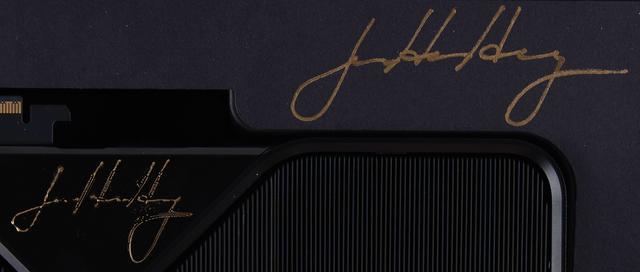
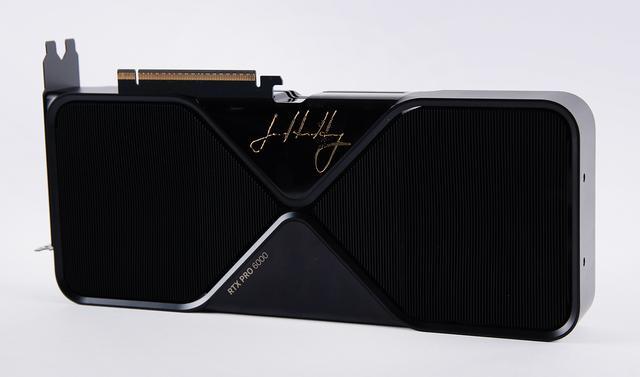 在整场拍卖中,成交价最高的是一台罕见的“Neumark”Apple-1 电脑。经过修复后,这台设备已经恢复正常工作,最终以 499,363 美元(现汇率约合 336.7 万元人民币)成交。作为整场拍卖的主要亮点之一,多件与史蒂夫 · 乔布斯有关的个人物品也被拍出,其中包括曾挂在他客厅里的照片、写给父亲的一张便条、存放在乔布斯家庭住所中的电脑零部件,甚至还有他八年级时完成的科学展览项目。与乔布斯数十年前留下的作品不同,这块由黄仁勋签名的 GPU 仅用了几个月时间就获得了如此高的收藏价值。根据 RR Auction 的介绍,这块显卡最初是 2026 年 GTC Physical AI Meetup 活动中的抽奖奖品。
二 | 该活动于今年 3 月英伟达年度 GTC 大会期间举行。尽管这块显卡最终拍出了 57,450 美元(现汇率约合 38.7 万元人民币)的高价,但这一成交价仍远低于目前公开拍卖中可能最昂贵的黄仁勋相关物品。今年 7 月,苏富比拍卖了一件黄仁勋穿过并亲笔签名的 Tom Ford 夹克,最终以 96 万美元(现汇率约合 647.3 万元人民币)成交,拍卖所得用于资助一家非营利组织,为新一代创业者提供奖学金和驻留项目支持。这件夹克最初的估价仅为 4 万至 6 万美元(现汇率约合 27 万至 40.5 万元人民币),但最终成交价接近 100 万美元(现汇率约合 674.3 万元人民币),远远超出拍卖行的预期。
Current article:http://www.zuanniangwandangliaolinechu.sbs/list_2th6fa/zgad.xlsx
Published on:06:43:25
推荐阅读


