
成吉思汗
线上线下六千余人次参训 自贸协定政策培训为外贸企业“充电”,线上线下六千余人次参训 自贸协定政策培训为外贸企业“充电”_我的网站

一 | 绥芬河8月21日电 (田晓慧)20日,中国贸促会2026年自贸协定政策解读与利用系统培训会(黑龙江专场)在绥芬河市举办。
"That's when I feel happiest in the day," Chen said, his gaze following the birds as they fade from view.
For Chen, who has spent his entire life in this narrow alley, the pigeons are far more than a pastime. They embody a way of life that has long defined the character of Beijing's historic hutongs.
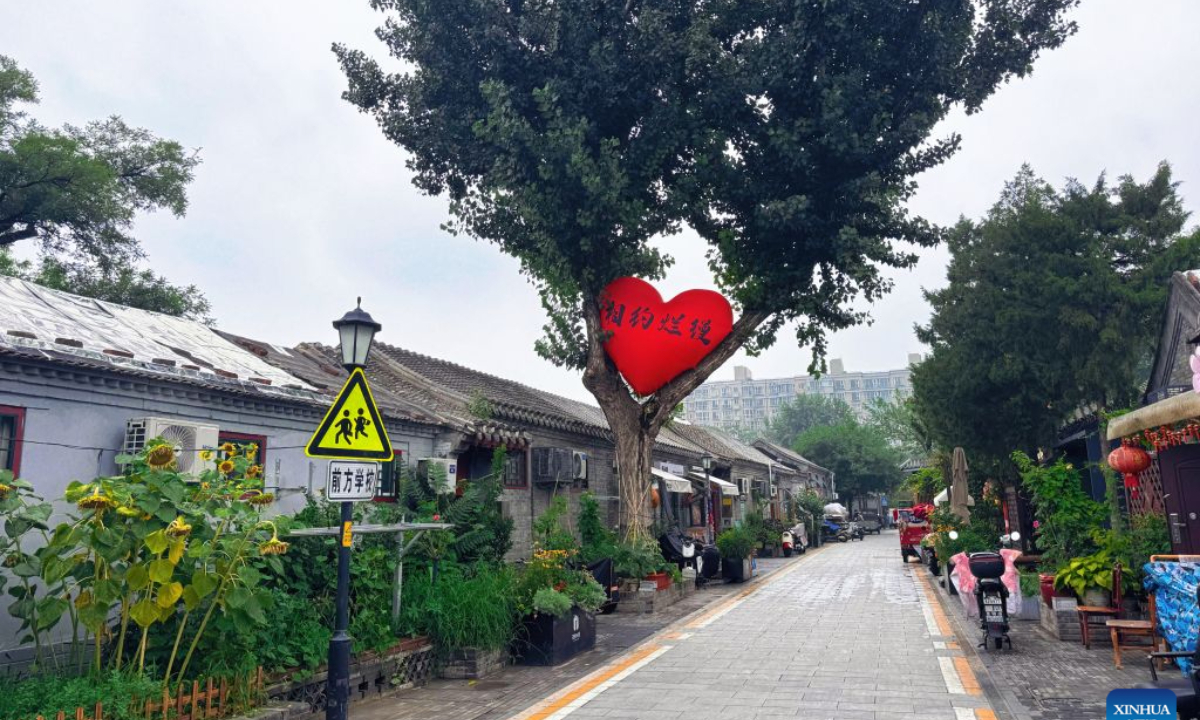
A city with over 3,000 years of recorded history, Beijing has constantly grappled with how to modernise without erasing its past. Lanman Hutong, tucked in the city's core, offers a compelling case study in urban renewal that honours neighbourhood memories while leaving room for the new.
OLD ALLEY, NEW LIFE
When Lanman Hutong launched a major renovation in 2018, Chen feared his hand-built pigeon loft, a fixture since 2013, might have to come down.
To his relief, the designers had other plans. "Pigeons are part of old Beijing's culture," they told him. "They should stay, and we'll upgrade the loft."
The birds were soon moved into a new wooden structure -- brighter, sturdier and better ventilated. "It wasn't just a new pigeon house," Chen said. "It told me that what we treasure can endure."
He was not alone in witnessing the change. Zheng Enqing, 78, who has lived in the neighbourhood for over three decades, recalled the alley's former chaos: cars crammed into every available space, pedestrians squeezing past.
Today, the rough pavement has given way to neatly laid grey bricks, and a nearby multi-story parking facility has freed the lane for foot traffic.
Yet for Zheng, the most telling improvements were those shaped by residents themselves.
When an outdoor air-conditioning unit began blasting hot air onto his prized grapevine, he raised it with the neighbourhood committee.
"They listened," Zheng said, noting that this responsiveness, for him, defined the entire renewal. The unit was moved to the rooftop and screened with a structure that blends with the historic surroundings.
"Our goal was to improve the environment while letting residents keep their way of life," said Chen Qinghong, planning manager at Beijing DeYuan Dade Real Estate Investment Co., Ltd., the project developer.
Chen added that over 100 consultation meetings were held with locals before and during construction, covering everything from parking to landscaping and public facilities.
"Urban renewal should not ask residents to adapt to redevelopment," said Song Jingyang, an official with the Beijing Municipal Commission of Urban Management. "Rather, redevelopment should adapt to the people."
A LIVING COMMUNITY
For planners, however, upgrading the physical fabric was only the first step.
In 2023, Lanman Hutong introduced a voluntary relocation program, letting residents decide whether to stay or leave. Vacant courtyards were then gradually opened to businesses and cultural ventures suited to the historic district's character.
By early 2026, 641 households in the Fayuan Temple Historic District, where Lanman Hutong sits, had opted for relocation, making room for 105 new businesses. Cafés, bookshops, restaurants and cultural studios have since taken root in centuries-old courtyards.
Zheng, who chose to stay, admitted that the newcomers have shifted his outlook. "At first, I thought cafés were only for young people. Now I believe we older residents should also embrace these changes," Zheng said.
He is also cheered by the growing number of young faces in the alley. "That's exactly the kind of change we want to see," he said.
Among them is 23-year-old Hu Feixiong, a graduate student at Beijing University of Civil Engineering and Architecture.
Earlier this year, Hu and his teammates moved into a youth entrepreneurship space in Lanman Hutong, where they began offering architectural cultural products, including layered refrigerator magnets inspired by Beijing's landmarks, directly to customers in a real neighbourhood.
"We only pay basic utility costs, yet we can meet customers, test our products and refine our ideas in a living community," Hu said. Rather than remaining on design sketches or screens, their creations now reach visitors face-to-face in one of Beijing's oldest quarters.
In this way, the city's architectural heritage endures not just through preservation but through the ingenuity of a new generation.
"It is the interaction among residents, businesses and the community that keeps a neighborhood alive," said Wang Mingjun, an official with the Xicheng District Urban Management Committee. "Urban renewal is not a one-off project. It is an ongoing process in which everyone has a role to play."
Official data show that since 2017, more than 5,200 backstreets and alleys in Beijing have undergone environmental upgrades, with resident satisfaction steadily rising.
That approach reflects a broader shift across China. In Jinfeng Town, southwest China's Chongqing Municipality, for instance, residents are pinning their hopes on ongoing renewal projects to raise living standards further.
Under the urban renewal plan for the 15th Five-Year Plan period (2026-2030), China aims by 2030 to build cities that deliver a high quality of life for all -- a vision that, in Lanman Hutong, is already taking shape.
。培训聚焦外贸企业拓展市场、合规避险等业务需求,同步开设线下会场与线上直播通道,企业、自贸片区协同先导区、重点商协会、相关业务部门共150余人参加现场培训,6000余人次参加线上培训。中国贸促会2026年自贸协定政策解读与利用系统培训会(黑龙江专场)在绥芬河市举办。

二 | 绥芬河市贸促会供图 培训紧扣外贸企业经营实际,邀请南京市贸促会、国家贸促会贸推中心、商法中心4名行业专家授课,课程设置贴合企业实际,主要包括中日韩自贸协定原产地判定与享惠操作、自贸协定及自贸试验区政策赋能产业出海路径、俄市场贸易投资机遇与全流程风险防控、优惠原产地证书申办实操及问题处置。讲师结合全国对外贸易典型案例解读政策,现场解答企业实操难题。

三 | 本次培训既是落实国家向北开放战略、释放自贸试验区制度红利的重要抓手,也是赋能兴边富民、助力边贸企业发展的务实举措。 培训由中国贸促会产业促进部主办,黑龙江省贸促会、中国(黑龙江)自由贸易试验区绥芬河片区管委会协办,绥芬河市贸促会承办。
Current article:http://www.zuanniangwandangliaolinechu.sbs/list_0lsqdlh/085j.xlsx
Published on:20:28:07